An NCAA men’s lacrosse field is 110 yards long and 60 yards wide, with 6-by-6-foot goals and a 9-foot-radius crease around each goal. Women’s field lacrosse uses a different layout and set of markings, including an 8½-foot goal circle, 8-meter arc, 12-meter fan and restraining lines.
Field dimensions and markings are not universal across lacrosse. Men’s field, women’s field, box lacrosse and Sixes each use playing areas designed for their specific rules.
How Big Is A Lacrosse Field?
An NCAA men’s lacrosse field measures 110 yards long by 60 yards wide.
Those dimensions apply specifically to NCAA men’s field lacrosse. The field is divided into offensive and defensive halves, with goals located at opposite ends.
Women’s field lacrosse uses its own field layout and markings, while box lacrosse and Sixes use different playing surfaces.
How Big Is A Lacrosse Goal?
NCAA men’s and women’s field lacrosse use goals that measure 6 feet wide by 6 feet high.
The goal provides the target for the offense, with a goal scored when the ball legally crosses the applicable goal line between the posts and beneath the crossbar.
The 6-by-6-foot measurement is not universal across all forms of lacrosse. NLL box lacrosse, for example, uses a smaller goal.
What Is The Crease On A Lacrosse Field?
The crease is the marked protected area surrounding the goal where the goalkeeper receives special privileges and attacking players face restrictions.
In NCAA men’s field lacrosse, the crease has a 9-foot radius.
The crease helps define the protected goal area and affects what goalies, attackers and defenders can do around the goal. Crease dimensions and rules differ in other forms of lacrosse.
What Is The Midfield Line In Lacrosse?
The midfield line divides an NCAA men’s lacrosse field into offensive and defensive halves and plays an important role in faceoffs, clearing and offside.
Faceoffs take place at the center to begin standard periods and after most goals.
The midfield line also matters after a team gains possession. NCAA men’s lacrosse uses an 80-second possession clock, and the offense must advance the ball across midfield while 60 seconds remain.
Teams also must maintain the required distribution of players across midfield under NCAA men’s offside rules.
What Do The Sidelines And End Lines Mean In Lacrosse?
The sidelines and end lines form the outer boundaries of an NCAA field lacrosse playing area.
When an ordinary ball crosses a boundary, the applicable out-of-bounds rules determine which team receives possession.
NCAA men’s lacrosse has a special rule for a shot or deflected shot that goes out of bounds. Possession can be awarded to the team whose inbounds player is nearest the ball when it becomes out of bounds.
That does not mean the closest player receives possession every time the ball leaves the field.
What Is The Substitution Area In Lacrosse?
The substitution area is the designated part of the field used by players entering and leaving the game.
NCAA men’s lacrosse allows on-the-fly substitutions through the substitution area, meaning teams can change players while play continues.
That helps teams use specialists for different situations, including faceoff specialists and offensive or defensive midfield groups.
How Is A Women’s Lacrosse Field Different?
NCAA women’s lacrosse uses different field markings and scoring-area structures from NCAA men’s lacrosse.
Major women’s field markings include:
- An 8½-foot-radius goal circle
- An 8-meter arc
- A 12-meter fan
- Restraining lines
The goal circle is the women’s protected area around the goal and should not be confused with the 9-foot-radius crease used in NCAA men’s lacrosse.
The other markings help define the women’s scoring area and player-positioning or defensive restrictions.
What Is The 8-Meter Arc In Women’s Lacrosse?
The 8-meter arc is a major scoring-area marking used in NCAA women’s lacrosse.
It surrounds the area near the goal and forms part of the women-specific field structure.
The 8-meter arc is one of the most visually distinctive differences between a women’s lacrosse field and an NCAA men’s field.
What Is The 12-Meter Fan In Women’s Lacrosse?
The 12-meter fan is another scoring-area marking used around the goal in women’s field lacrosse.
It extends farther from the goal area than the 8-meter arc and helps form the broader structure of the women’s scoring area.
The 12-meter fan does not have a direct equivalent among the primary NCAA men’s field markings.
What Are Restraining Lines In Women’s Lacrosse?
Restraining lines are markings used in NCAA women’s lacrosse to regulate player distribution on the field.
They are important because women’s lacrosse does not simply use the same midfield and offside framework as NCAA men’s lacrosse.
The restraining-line system helps determine where players can operate under the women’s rules.
Are All Lacrosse Fields The Same Size?
No. Lacrosse playing areas and markings vary depending on the format.
NCAA men’s field lacrosse uses the 110-by-60-yard field and 9-foot-radius crease, while NCAA women’s lacrosse has its own goal-circle, restraining-line and scoring-area markings.
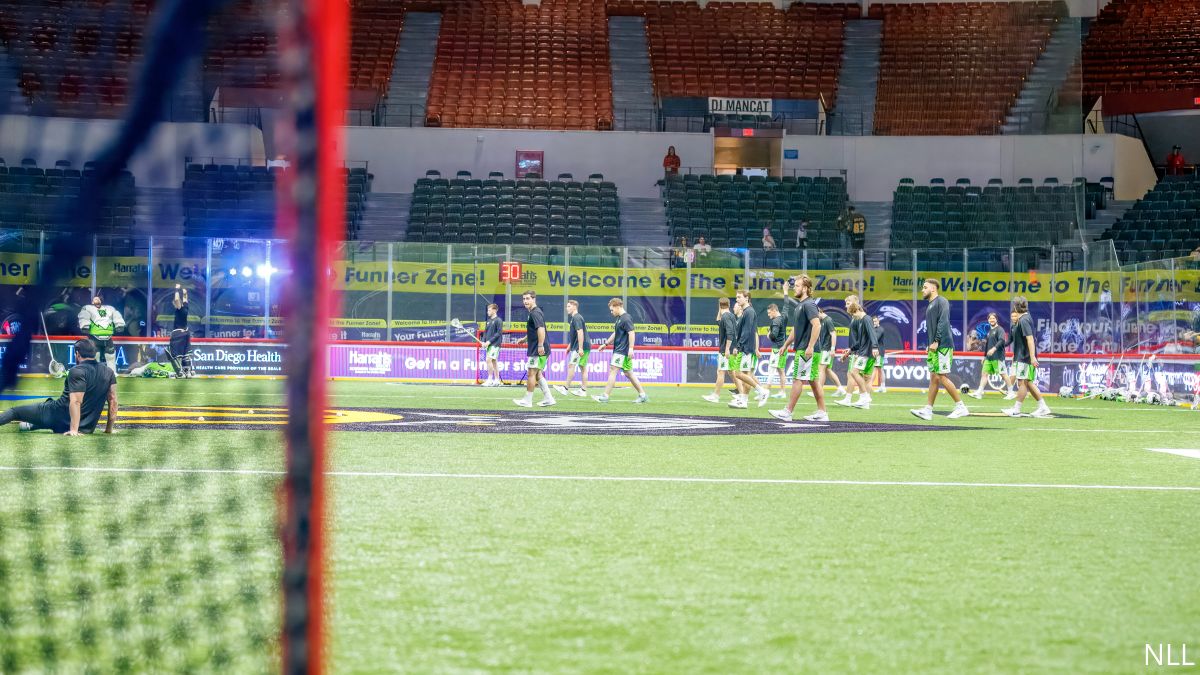
The differences become even greater in other versions of the sport. NLL box lacrosse is played on an enclosed indoor artificial surface surrounded by boards and glass, while World Lacrosse Sixes uses its own compact field and markings.
For that reason, lacrosse field dimensions should always be tied to the specific version of lacrosse being discussed.
Frequently Asked Questions About FloLacrosse
What Do You Get With A FloLacrosse Subscription?
A FloLacrosse subscription combines live lacrosse with replays and year-round coverage of the sport.
The NLL gives subscribers a season-long professional box lacrosse property to follow, while FloLacrosse also carries additional college, high school and event programming. Beyond streaming, fans can use FloLacrosse for rankings, recruiting coverage, scores, schedules, highlights, interviews, news and analysis, creating a destination for following lacrosse rather than simply finding a stream on game day.
What Can You Watch On FloLacrosse?
FloLacrosse subscribers can watch professional lacrosse through the National Lacrosse League, along with additional college, high school and event coverage available on the platform.
The NLL significantly expands that offering by providing a professional league fans can follow across an entire season. FloLacrosse's broader schedule also features field and box lacrosse at multiple levels, though specific event availability can vary by competition and streaming rights.
Can You Watch The NLL On FloLacrosse?
Yes. The National Lacrosse League streams on FloLacrosse as part of FloSports' partnership with the NLL.
That makes professional box lacrosse one of the biggest reasons for lacrosse fans to consider a subscription. Fans can follow NLL teams, players and games throughout the season while using FloLacrosse's broader coverage to keep up with the league and the sport.
Can You Watch Lacrosse Live And On Demand On FloLacrosse?
Yes. FloLacrosse provides live streams and on-demand replays for supported lacrosse programming.
That gives fans flexibility to watch games live or return to available broadcasts afterward. Subscribers also can watch through supported FloSports apps and connected devices, making it easier to follow lacrosse throughout a busy weekend or season.
Does FloLacrosse Have Scores, Schedules And Results?
Yes. FloLacrosse provides schedules, scores, results and other competition information alongside its video and editorial coverage.
These resources help fans track upcoming games and completed events while following leagues, teams and tournaments throughout the season.
Is A FloLacrosse Subscription Worth It?
FloLacrosse provides the most value to fans who want to follow lacrosse across multiple levels. The addition of the NLL strengthens that offering with season-long professional box lacrosse, while college, high school, recruiting and event coverage provides additional ways to follow the sport. Live games, replays, rankings, scores, recruiting coverage and original reporting extend the platform's usefulness beyond individual broadcasts.
How Do I Sign Up For FloLacrosse?
Fans interested in subscribing can visit the official FloLacrosse signup page to see current subscription options and sign up for access to available NLL games and other live and on-demand lacrosse programming.
What do you get with a FloLacrosse subscription?
Subscribers get supported live lacrosse and replays, including NLL coverage, plus rankings, recruiting coverage, schedules, scores, results, highlights, news and analysis.
Can you watch the NLL on FloLacrosse?
Yes. FloSports is an NLL streaming partner, giving FloLacrosse subscribers access to National Lacrosse League coverage as part of the platform's professional lacrosse offering.
What lacrosse can you watch on FloLacrosse?
FloLacrosse features professional box lacrosse through the NLL along with currently available college, high school and other lacrosse competitions.
Can you watch FloLacrosse on demand?
Yes. Supported games and events are available for replay, allowing subscribers to catch up on lacrosse they could not watch live.